
Retail signage can be planned as one coordinated system rather than a single storefront sign. For chains in particular, this approach helps the sign above the door, the window graphics and the in-store signs look like parts of one set. This article outlines the idea, which is discussed in a recent industry article (see the source note at the end), and adds our notes on specifying a retail signage package.
From one storefront sign to a full signage system
A shopper meets a store’s signage in stages, from the first view on the street to the moment of payment. Planning the signs along that path helps each one do a clear job:
- Storefront: the main brand sign that identifies the store from a distance
- Windows: graphics and displays that give passers-by a reason to enter
- Interior: department, category and feature-wall signs that organise the space
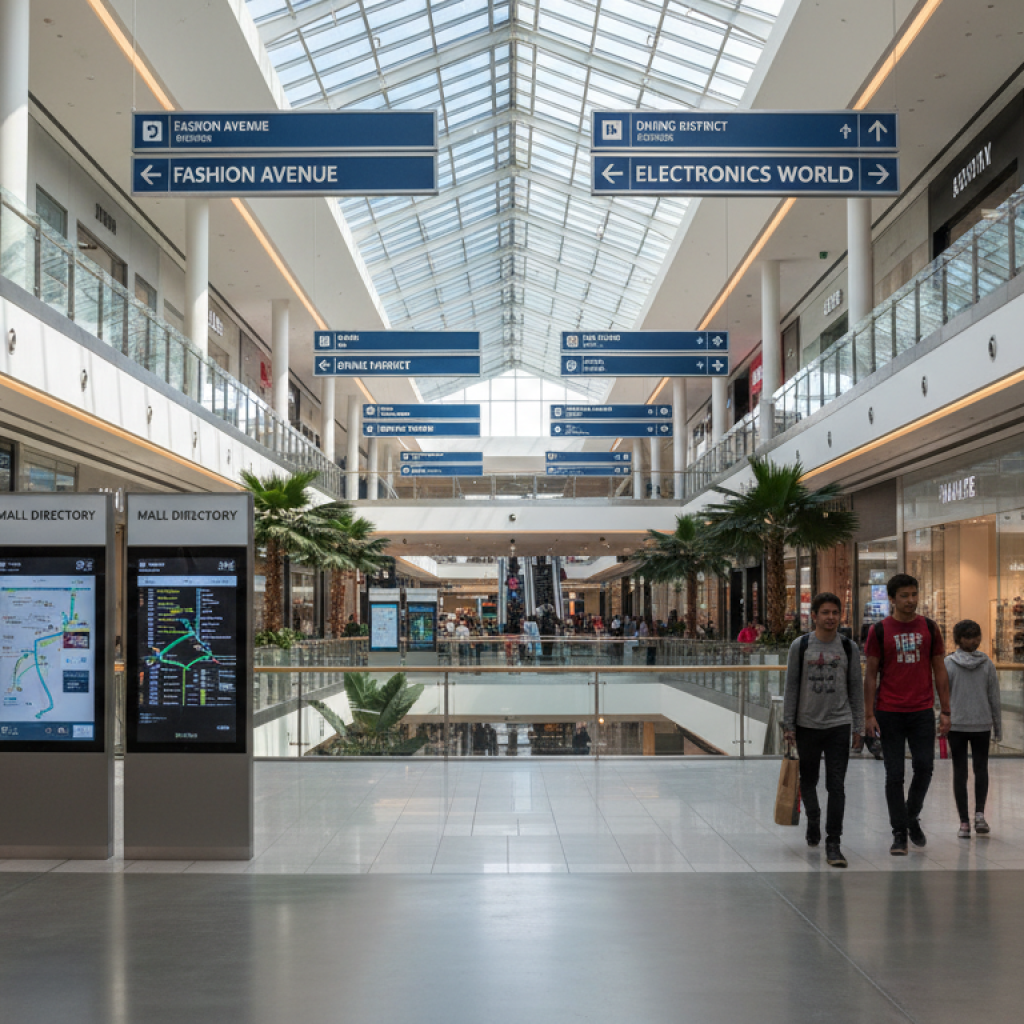
- Wayfinding: directional signs in larger stores with several zones or floors
- Checkout: counter, queue and promotional signs at the point of sale
For chains, consistency is a common concern. When each branch is ordered separately, small differences in materials, colours and lighting can appear between stores. Treating signage as a system means using the same specification for every location.
Our notes for retail signage buyers
Specify the package, not only the storefront sign
Listing every sign by zone at the start makes it easier to keep materials, colours and lighting consistent. A retail package might include:
- Storefront: LED channel letters or halo-lit and illuminated signs
- Windows: graphics and promotional displays
- Interior: dimensional letters and logos, department and category signs
- Larger stores: wayfinding and directional signs
- Checkout: counter, queue and point-of-sale signs
Fix the standards before the second store
Agree the details once and record them in a short specification sheet: materials and thicknesses, colour references, finishes, LED colour temperature and mounting method. Later orders can refer to the same sheet, which helps new branches stay consistent with the first one.
Match materials to where each sign will be used
Exterior signs are exposed to sun, rain and temperature changes. Interior signs are touched and cleaned more often. Stating the location of each sign in your enquiry helps the manufacturer suggest suitable materials, finishes and lighting components.
Tell your supplier whether it is a mall unit or a street store
The two situations often need different information. For a street-front store, it helps to share the facade drawings and where power is available. For a unit inside a shopping mall, it helps to share the landlord’s signage criteria, such as size limits, illumination rules and fixing restrictions. Sign permit rules and landlord requirements vary by location, so please confirm them with the local authority or the landlord before ordering.
Planning a retail signage project?
Send us your storefront drawings, sign dimensions and the number of locations, and we can discuss how the signs could be produced as a matching set. Contact Sunpin Sign to discuss your project.
Source: VIZAL. Original article: https://vizal.ro/2026/10/09/retail-signage-the-complete-system/. This article is written by Sunpin Sign in its own words and is provided for general information only. Sunpin Sign is not affiliated with VIZAL.